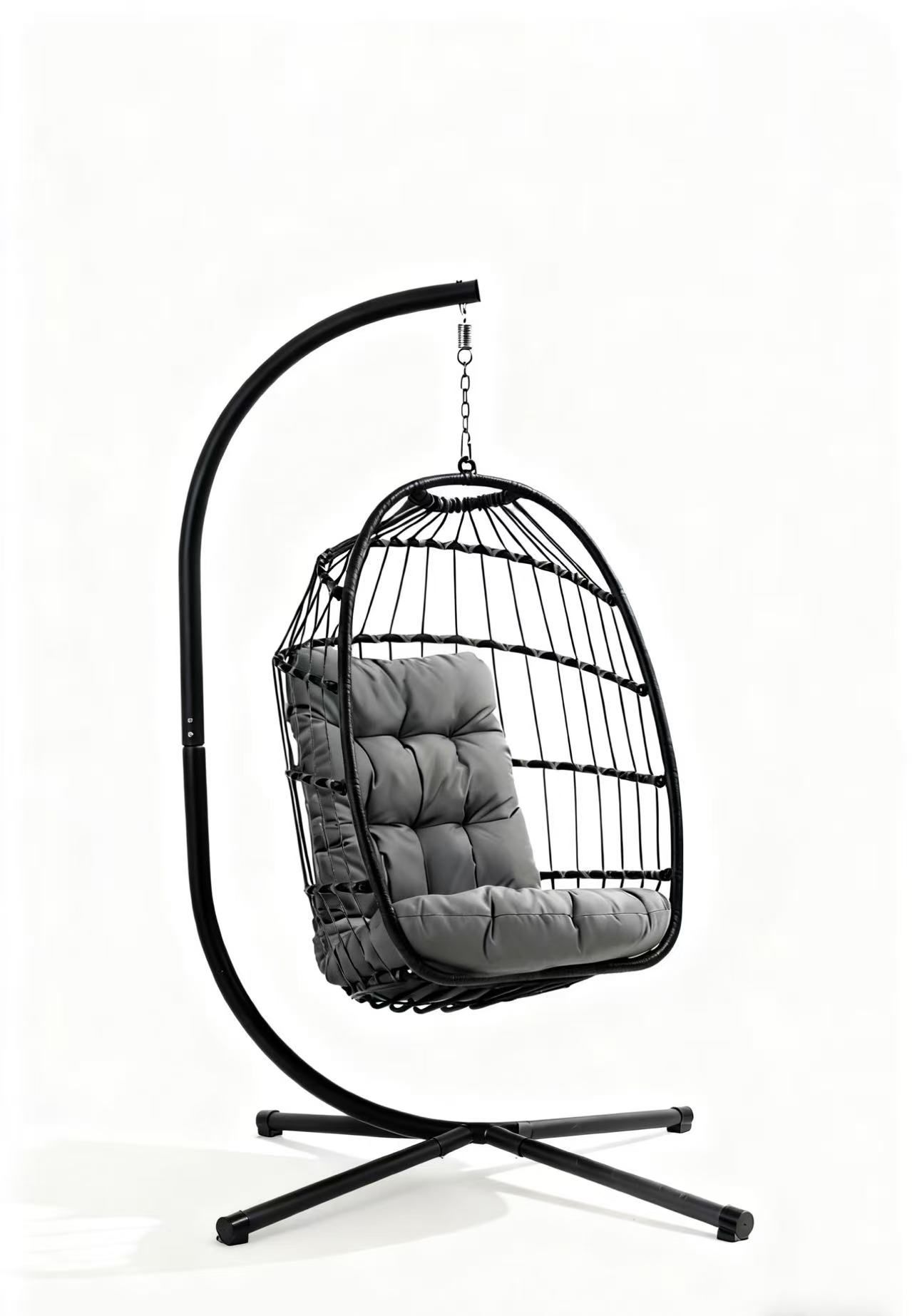
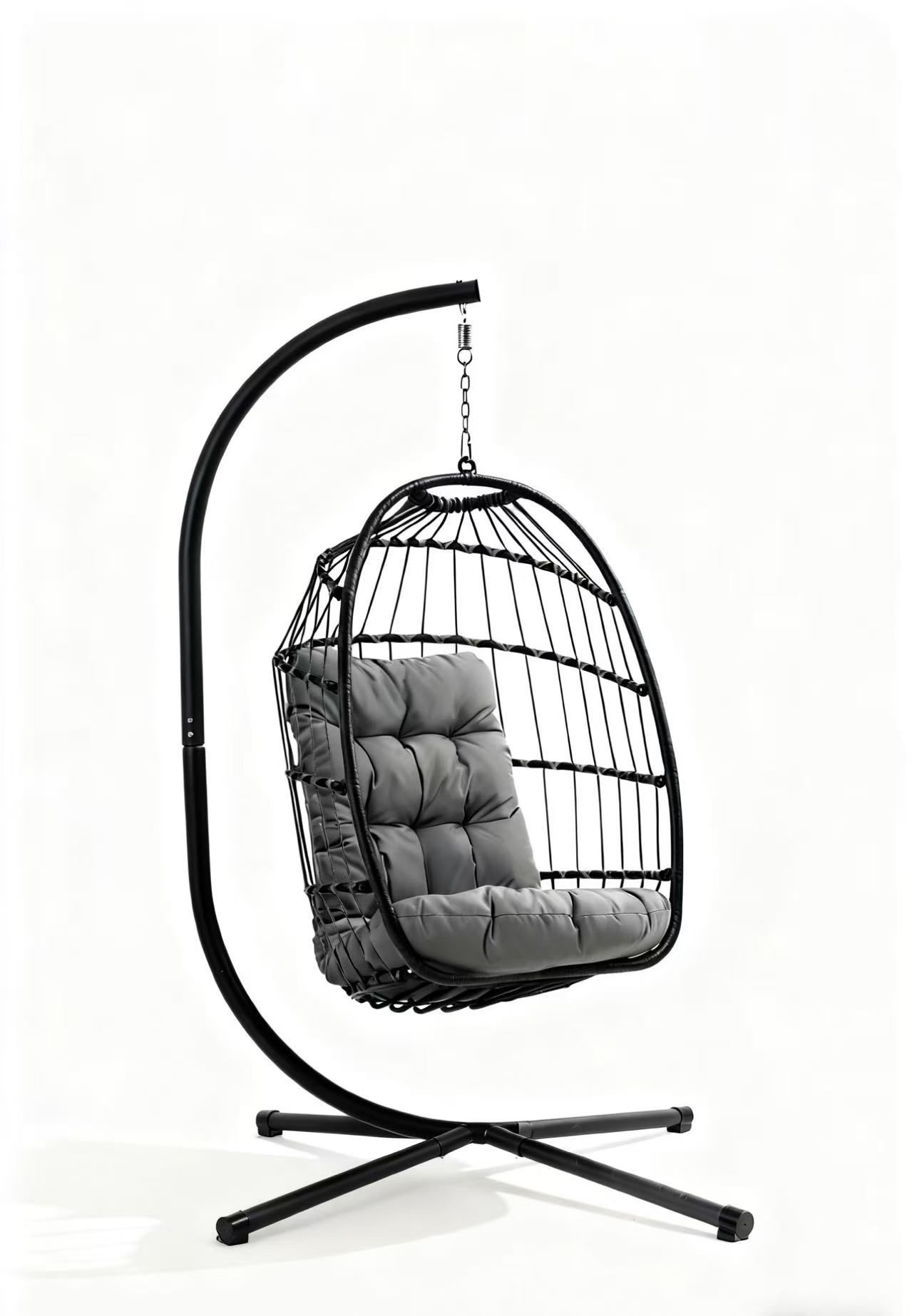
• Inspect the chair before each use for any signs of damage, distortion, cracks in the rattan weave, loose fittings, bent frame components, or instability. Do not use the chair if any defect is identified until repairs have been properly completed.
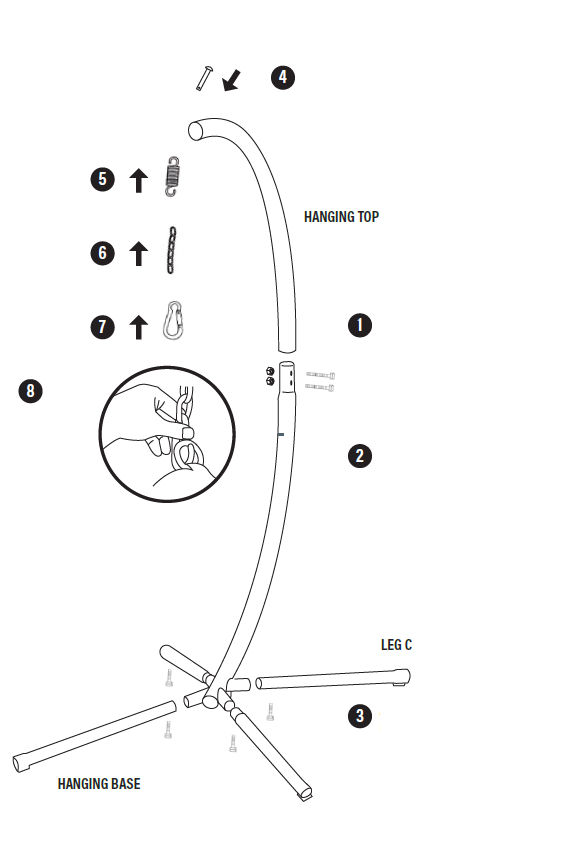
• Check all bolts, fixings, hooks and structural connections at least every two weeks during regular use and retighten as necessary. Pay particular attention to joints associated with the folding mechanism and the hanging support point.
• Examine the folding seat mechanism regularly to ensure it opens and locks fully into position. Remove debris from hinge areas and lightly lubricate metal pivot points with a suitable non-staining lubricant if movement becomes stiff. Wipe away any excess lubricant immediately.
• Inspect the suspension point, chain, spring (if fitted), and hanging hardware monthly for wear, distortion, corrosion or metal fatigue. Replace any worn components immediately.
• If used outdoors, clean the rattan frame regularly using a soft cloth or brush and mild soapy water. Rinse with clean water and allow to dry thoroughly. Do not use pressure washers, abrasive cleaners, solvents, or bleach-based products as these may weaken the rattan material or protective coatings.
• Ensure the metal frame and base are kept dry. After exposure to rain, wipe down all metal parts to reduce the risk of corrosion. Treat minor rust spots promptly with appropriate rust treatment products and touch-up paint suitable for outdoor metal furniture.
• Store the chair indoors or under a weatherproof cover when not in use, particularly during prolonged periods of rain, frost, or high winds. Extended exposure to moisture and UV light may weaken materials over time.
• During winter months or extended non-use, fully clean and dry the chair before storage. Store in a dry, well-ventilated location to prevent mould growth and material degradation.
• Regularly check that the base remains level and stable. Uneven ground may cause stress on joints and increase wear.
• Keep the surrounding area clear to reduce accidental impact damage to the frame or base.
• The cushion is UKFR compliant; however, the cover is non-removable and must not be machine washed. To clean, wipe the surface gently with a damp cloth and mild upholstery cleaner. Avoid soaking the cushion.
• Do not use excessive water when cleaning the cushion, as moisture may penetrate the filling and cause mould, odour, or degradation of fire-retardant properties.
• Allow the cushion to air dry completely before placing it back on the chair. Do not tumble dry, iron, or expose the cushion to direct heat sources such as radiators or heaters.
• If the cushion becomes saturated due to rain, remove it immediately and dry thoroughly in a warm, well-ventilated environment away from direct heat.
• Regularly inspect the cushion for tears, seam separation, thinning padding, or signs of fire-retardant fabric damage. Replace the cushion if significant wear is observed.
• Do not modify, drill, cut, or alter any part of the chair structure or cushion, as this may compromise structural integrity and invalidate safety compliance.
• Maintain a record of inspection dates and any maintenance carried out to ensure ongoing safe use.
• Replace the chair if structural components show significant fatigue, cracking, excessive corrosion, or deformation that cannot be safely repaired.